Practical Compass Tips For UK Hikers
Learning how to use a compass hiking in the UK is one of the most valuable outdoor skills you can have. When fog rolls in or a trail disappears, a compass and map can keep you safe and confident — even without GPS.
In this short guide, you’ll find seven practical, trail-tested tips that show you how to use your compass more effectively on real UK hikes, from the Lake District to the Scottish Highlands.
👉 If you’re brand new to navigation, start with our guide: How To Use A Compass For Hiking In The UK
1. Practise Before You Need It
Knowing how to use a compass is one thing — actually doing it on the trail is another. Many hikers carry one but rarely take it out of their pack. Of the hikers we spoke with, over half admitted never having used one to navigate.
Start small: practise on familiar, low-level routes such as your local woods, the South Downs Way, or a nearby country park.
Set bearings between obvious landmarks (a church spire, a stile, a hilltop) and get used to translating what’s on your map into the real landscape.
The more you practise in good weather, the calmer you’ll feel when conditions turn foul on a bigger hike.
2. Pair It With GPS — Don’t Replace It
GPS apps like OS Maps or Komoot are brilliant, but they rely on batteries and signal. Use them alongside your compass, not instead of it.
Check that your bearing matches your app’s direction arrow. This builds confidence — and teaches you how your digital tools behave in real terrain (some can be quirky!).
3. Keep Your Compass Handy
If your compass is buried deep in your rucksack, you won’t use it until you’re already lost. Keep it in a jacket pocket or clipped to your chest strap for quick access.
In poor visibility, saving even 30 seconds can make a big difference to your stress levels.
👉 Quick Tip: Packs with easy-access waist belt side pockets make this simpler — see our Best High-End Backpacks for UK Hiking for recommendations.
4. Choose the Right Compass
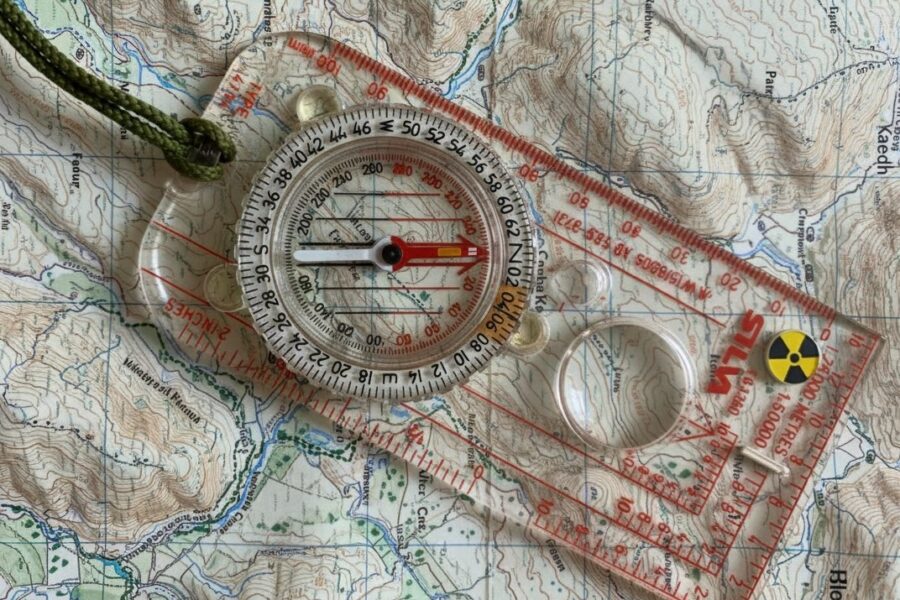
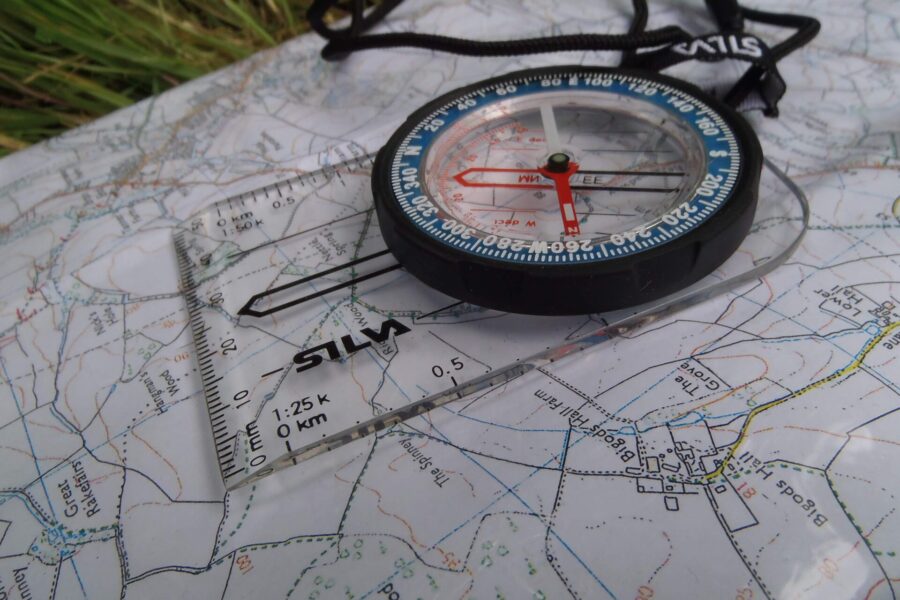
Stick with trusted models like the Silva Expedition 4 or Suunto A-30 — both UK favourites for around £30
Go for a baseplate compass from trusted UK-stocked brands likeThese cost around £30 in 2025
Avoid cheap novelty versions. They’re often inaccurate or can stick when you need them most. Don’t risk it!
Look for your compass at UK retailers such as Go Outdoors, Ellis Brigham, Cotswold Outdoor, Alpkit. All stock reliable models.
5. Think Safety, Not Precision
You don’t need pinpoint orienteering precision for most UK hiking trails.
A bearing accurate to within a few degrees will keep you moving in roughly the right direction until you find your next landmark or trail junction.
Focus on staying safe and confident, not chasing a perfect bearing.
6. Always Have a Map to Match
Your compass is only half the story. Always carry a paper Ordnance Survey or Harvey map for the area you’re hiking.
Choose laminated or weatherproof versions — UK weather can turn quickly, and soggy maps are useless.
If you’re on a long-distance trail, bring all the sheets you’ll need or invest in a Harvey XT40 Trail Map that covers the entire route.
7. Check for Magnetic Interference
Here’s one many hikers overlook: keep metal objects and electronics away from your compass.
Mobile phones, GPS units, knives, even the metal frame of your rucksack can cause false readings.
Hold the compass away from your body when taking a bearing, and re-check if your direction seems “off.”
This small habit can prevent big navigation errors.
💡 Want more hiking know-how?
Read next: 12 Real Hiking & Backpacking Tips From the UK Trail You Won’t Find in Most Guides.