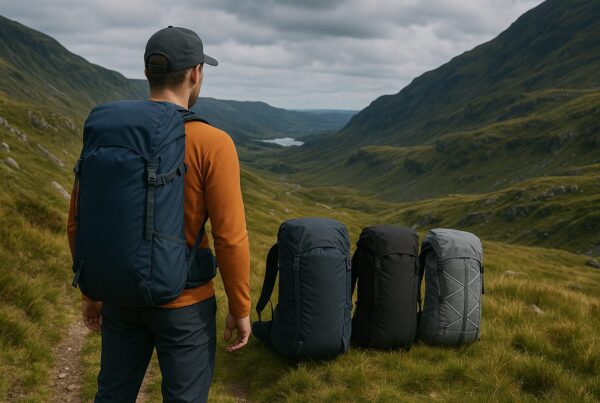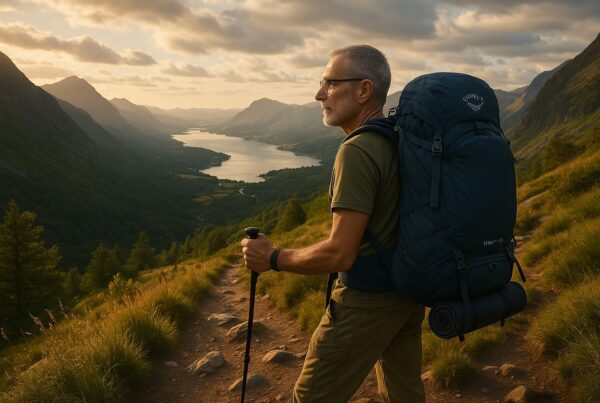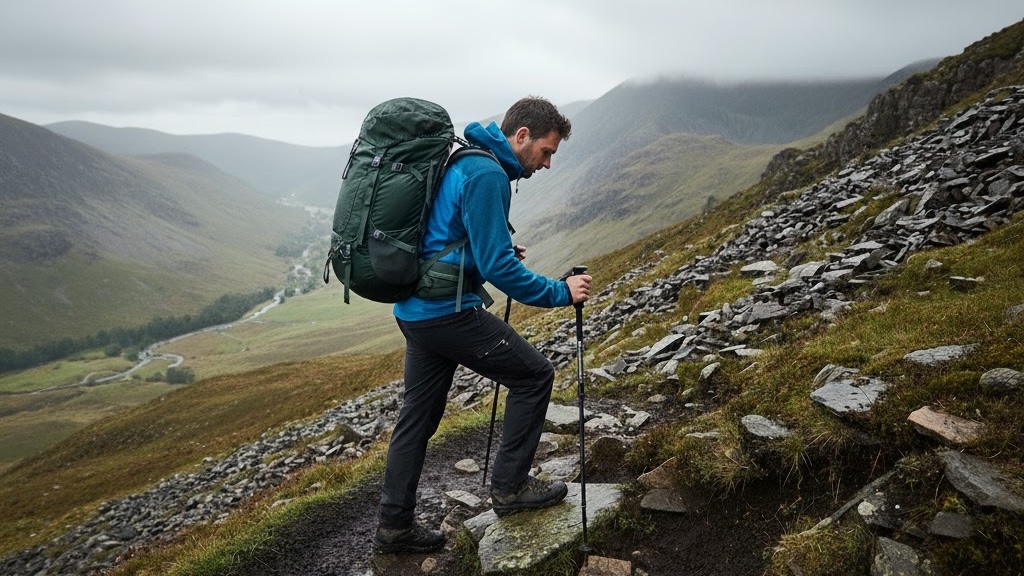
Every seasoned hiker in the UK has a story about pack regret.
Mine unfolded in the Brecon Beacons — not through ignorance, but pure spontaneity. My cousin admitted she’d never climbed Pen-y-Fan, despite living practically beneath it. A quick weather check later, and we decided to bag the peak that very afternoon.
The only problem? My main Daypack — the one built for stability — was two hours away at home.
Thinking I could manage a quick ascent with minimal fuss, I went and grabbed a £12 basic 20-litre daypack from a local retailer. It looked fine for a short walk, but it obviously wasn’t built for mountain conditions. By the time we hit the exposed, wind-battered ascent, its limitations were obvious.
With no frame or hip belt, the load shifted wildly with every gust of wind and uneven step. This wasn’t merely annoying; it genuinely compromised my balance and what started as a spontaneous climb turned into a challenging, miserable and distracting slog.
That experience taught me the lesson I won’t forget: when choosing the best hiking daypack in the UK, stability and fit are non-negotiable—they’re essential for safety and comfort.
Choosing Your Trail Partner: How to Pick the Right Daypack for UK Hikes
Choosing the right hiking daypack isn’t about picking the prettiest colour; it’s about selecting a trusted partner that manages your load efficiently, handles the unpredictable British weather, and keeps you balanced whether you’re hopping bogs in the Cairngorms or tackling steep, wet slate in the Lake District.
For walks spanning a few hours to a full day across challenging terrain, your daypack is arguably the most crucial piece of gear after your boots. It’s the hub for your essential safety equipment, extra layers, and all-important flasks of tea. We’re going to walk you through the essential factors—from choosing the perfect capacity to identifying UK-specific features—so you can buy once and focus on the views, not the ache in your shoulders. Let’s dive into how to choose the best hiking daypack UK trails demand.
The Essential Factors: Capacity & Optimal Fit
When evaluating a daypack, every hiker immediately looks at two core elements: how much kit it can hold, and whether it feels right on the back. Get these wrong, and everything else—the fancy pockets, the compression straps—becomes irrelevant.
Determining Your Ideal Daypack Capacity (15L–35L)
In the UK, the size of the daypack you need is almost entirely dictated by weather and season. Unlike warm climates, you are almost always carrying substantial ‘just-in-case’ layers, safety equipment, and sometimes a stove and fuel, particularly for winter walking or bagging serious peaks.
We measure capacity in litres (L). For day hiking, the sweet spot for most UK trails lies between 20L and 28L. This range provides the necessary space for waterproofs, a fleece, lunch, and essentials without becoming bulky.
Use the table below as a guide to pinpointing the right size for your typical adventure across the British Isles:
👉 Practical Advice: Always choose capacity based on the coldest, wettest scenario you plan to hike in. That extra 5L of space allows you to comfortably carry a spare fleece, a proper emergency shelter, and a thermos—kit that is non-negotiable for safety in British mountains like Snowdonia or the Highlands. Don’t just pack for sunshine!
The Crucial Element: Achieving Optimal Pack Fit
A pack can have the perfect volume, but if it doesn’t fit your body, it will actively work against you. For daypacks over 25 litres, paying attention to fit moves from being a bonus to being a safety necessity, as a poorly distributed load can throw your balance, especially when traversing steep, muddy, or uneven ground.
Torso Length: Measuring for Load Transfer
This is the most critical fit factor. Many high-quality daypacks (25L+) are now available in different back lengths (S/M/L) or feature an adjustable torso system. This ensures the pack’s hip belt sits over your hip bones, not your waist, allowing the belt to carry 70–80% of the pack’s weight. If the load isn’t on your hips, your shoulders will be taking the strain, leading to fatigue and discomfort.
The Hip Belt: Stability for Technical Terrain
A decent, padded hip belt is non-negotiable for load distribution and crucial stability when carrying heavy kit or when you need to maintain balance while scrambling (a common feature of walks in the Lake District or on certain Munros). The sternum strap simply stabilises the pack and prevents the shoulder straps from slipping, but the hip belt does the essential load-bearing work.
Adjustable Straps: Functionality with UK Layers
Always check that the adjustment mechanisms and buckles are easy to manipulate, even when wearing thick gloves or a bulky waterproof jacket. This is a key UK consideration. Fiddly adjusters are a real pain when the rain starts lashing down and you need to quickly cinch down your load over an extra layer.
🌧️ Navigating UK Weather: Must-Have Features
This is where generic gear advice often falls short. Hiking a dry path in the Alps is one thing; tackling a boggy, steep descent in the Scottish Highlands in November is quite another. In the UK, how your pack interacts with rain and unstable ground is vital for comfort and safety.
Back Systems: Ventilation vs. Stability
The system that sits between your back and the main pack body determines both your comfort on humid days and your stability on challenging ground.
Suspended Mesh Back Panels
These systems feature a trampoline-like mesh held taut by a flexible frame, creating a gap between the pack and your back.
- Pro: Excellent airflow and ventilation, reducing back sweat—a bonus on warm, humid UK summer days.
- Con: This system can slightly push the load away from your back, affecting your centre of gravity. This is a potential drawback if you are scrambling or tackling very steep, technical terrain where balance is key.
Contact or Ventilated Foam Back Panels
These systems sit directly against your back, often using segmented foam with deep channels for airflow.
- Pro: Provides superior stability and load control, keeping the weight close to your body. This is crucial for balance when navigating wet rocks, narrow ridges, or steep, muddy paths—terrain commonly found across the UK national parks.
- Con: Generates more heat and sweat than suspended mesh.
Real Trail Use: While ventilation is nice, stability is often the more critical factor for safety and sustained comfort on typical varied British terrain. Prioritise a system that keeps the pack snug and close if you plan on challenging mountain days.
Weatherproofing and Durability
Never trust the phrase ‘weather resistant’ in the UK. We need robust defences against the kind of persistent, insidious dampness that seems to soak through everything.
Pack Cover vs. Full Waterproof Fabric
Many packs come with an integrated rain cover. While these are useful, they only protect the top and sides of the pack; water can still wick up through the back panel or seep through zippers.
Our advice is simple: rely on a pack liner (dry bag) in addition to an integrated rain cover. A simple, lightweight dry bag placed inside the main compartment provides a truly reliable barrier, protecting vital kit (like spare clothes, maps, or electronics) against the worst of the British downpours.
Material Robustness
Look for a durable nylon or polyester fabric (measured in denier, D). For daypacks, anything over 300D offers good puncture and abrasion resistance, standing up well to being scraped against rocks or dragged across heather. Also, inspect the zippers: look for robust, covered, or sealed zips, not simple exposed coils, as these are a major point of water entry.
🎒 Organisation and Practical Details: Pockets & Carry Systems
Once you’ve settled on the perfect size and back system, the small details of organisation become paramount. On a cold, windswept hillside, fumbling for a compass or a snack is frustrating; effective organisation ensures safety and efficiency.
Essential Pockets and Quick-Access Features
The best packs allow you to access critical items without having to perform a full pack strip-down every time.
Hip-Belt Pockets: Quick Access Essentials
These pockets, located on the padded wings of the hip belt, are non-negotiable for UK hiking. They should be large enough to hold essentials that you need constantly:
- Navigation: Your compass, GPS device, or smartphone for quick map checks.
- Energy: A few snack bars or gels.
- Protection: Lip balm and sun cream (yes, even in Scotland!).
External Water Bottle Pockets
Look for deep, elasticated side pockets. Crucially, they must be positioned so you can reach your water bottle without taking the pack off. Fumbling and asking a friend to fetch your drink breaks your rhythm and balance on the trail.
Shove-It Pockets and External Storage
A large, external mesh or stretchy pocket on the front of the pack (often called a “shove-it” or “stash pocket”) is incredibly useful. This is the ideal place to quickly stuff a wet waterproof jacket or trousers, keeping the damp items separate from the dry gear inside the main compartment. It’s a key feature for dealing with the stop-start rain common in the UK.
Hydration & External Carry Systems
Beyond simply holding your gear, a daypack needs attachment points and sleeves for specific hiking tools.
Trekking Pole Attachments
If you use trekking poles—highly recommended for steep ascents and descents across rocky British trails—ensure the pack has secure attachment loops. These should hold the poles tightly and safely against the pack when you don’t need them (e.g., during scrambling sections or easy flat ground).
Hydration Sleeve vs. Bottle Pockets
Most modern packs offer an internal reservoir sleeve for a hydration bladder (often sold separately).
- Bladder Pro: Allows continuous drinking without stopping.
- Bladder Con: Harder to refill on the trail, and a leak can saturate the rest of your kit.
- Bottle Pro: Easy to see how much water you have left and simple to refill.
👉 Expert Tip: Many experienced UK hikers use both: a reservoir for the bulk of their water supply, plus a bottle in a side pocket containing a sports drink or an emergency water filter.
Compression Straps
These straps (usually on the sides) serve two purposes:
- They pull the load closer to your body, improving stability, particularly if the pack isn’t full.
- They secure items like foam sleeping mats or extra jackets stuffed into the external pockets.
🏆 Top Hiking Daypack Recommendations for UK Trails
You now have a comprehensive understanding of the capacity, fit, weather-proofing, and organisational features that distinguish a good daypack from the best hiking daypacks for UK conditions.
We’ve applied these exact expert criteria to select packs that consistently outperform their rivals on British trails. These recommendations prioritize stability, durability, and practical load management, whether you’re tackling a summer walk in the Peak District or a winter ascent in the Highlands. Below are the best-in-class models we recommend for every serious UK hiker.
To offer a more complete picture, we’ve broken down the key strengths and limitations of our top two recommendations below, ensuring you understand the real-world trade-offs before you buy.
Featured Daypacks: Pros and Cons
These packs were selected because they deliver the stability, weather resilience, and practicality that is mandatory for sustained, year-round hiking across the UK’s demanding mountain and moorland environment.
⭐️ Osprey Talon/Tempest: The UK’s All-Round Performer (22L-33L)

This is the pack that almost every serious UK hiker eventually lands on. It’s the industry benchmark because it perfectly solves the core problem of stability on technical terrain. The Talon (men’s fit) and Tempest (women’s fit) feature a highly adjustable back system with the signature AirScape™ back panel. This system keeps the load close to your back—essential for balance when traversing steep, wet slate or hopping bogs—while still offering vital ventilation.
The continuous-wrap BioStretch™ harness and hip belt mean the pack moves with you like a second skin, eliminating the load-shifting or “bounce” that can quickly lead to fatigue or loss of footing. While it sits at the higher end of the price scale, you are investing in a proven fit and durability that will serve you on every UK peak, from Pen-y-Fan to Ben Nevis.
⚡️ Pros
- Best-in-Class Stability and Fit: Excellent load transfer and close-to-body carry, even under heavy loads.
- Highly adjustable torso length.
- Durable fabric, built to last years of UK abuse.
- Excellent organization (hip-belt pockets, external shove-it pocket for wet gear).
- Widely available in UK shops for trying on.
❌ Cons
- Price & Weight: It sits at the higher end of the price spectrum and is heavier than frameless options (a necessary trade-off for the superior frame).
- Rain Cover Not Included (must be purchased separately).
- External stretchy pockets can hold water in sustained downpours.
🧭 Verdict: The benchmark UK daypack — superb fit, unbeatable stability, and proven reliability from the Lakes to the Highlands.
👉 Check the latest prices at Osprey.com (UK) | Amazon UK
⭐️ Deuter Speed Lite: Lightweight Agility for Fast Hikers (20L–30L)

The Deuter Speed Lite range is purpose-built for hikers who prioritise speed, efficiency, and minimalism — yet still demand real-world trail durability. It’s a standout choice for day missions where you’re covering long distances or moving fast over technical ground. The featherweight build (from just 400g upwards) and Deuter’s proven Lite carry system make it incredibly comfortable without sacrificing essential support.
The pack’s Delrin® U-frame subtly stabilises the load while keeping overall rigidity low, striking a balance between structure and freedom of movement — ideal for ridge scrambles or mountain days where agility matters. The shoulder straps and hip fins are well-padded but pared down, giving a close, bounce-free fit that feels more like a running vest than a traditional hiking pack.
While it can’t match the ventilation or full adjustability of the Osprey Talon, its stripped-back simplicity and exceptional comfort-to-weight ratio make it a firm favourite for summer hikes, fastpacking, or anyone who simply wants to go light without compromising trail readiness.
⚡️ Pros
-
Featherlight Design: Among the lightest technical daypacks suitable for UK terrain.
-
Stable Carry: Excellent load control with minimal bounce — great for speed hiking or scrambling.
-
Durable for Its Weight: Reinforced panels withstand abrasion from rock and heather.
-
Streamlined Organisation: Smart pocket layout keeps essentials accessible without clutter.
-
Excellent Value: Competitive price point for a premium European-made pack.
❌ Cons
-
Limited Ventilation: The close-fitting back can run hot during summer ascents.
-
Minimal Padding: Not ideal for carrying heavier winter loads or bulky gear.
-
Less Adjustability: Fixed back length means fit isn’t as dialled-in as Osprey’s system.
-
Sparse Features: Lacks built-in rain cover and compression straps are basic.
🧭 Verdict: Best for fast and light hikers — an agile, minimalist pack that thrives on UK scrambles and long summer mileage.
👉 Check the latest prices at Deuter.com (UK) | Amazon UK
⭐️ Alpkit Presta: The Best Value Contender (25L)
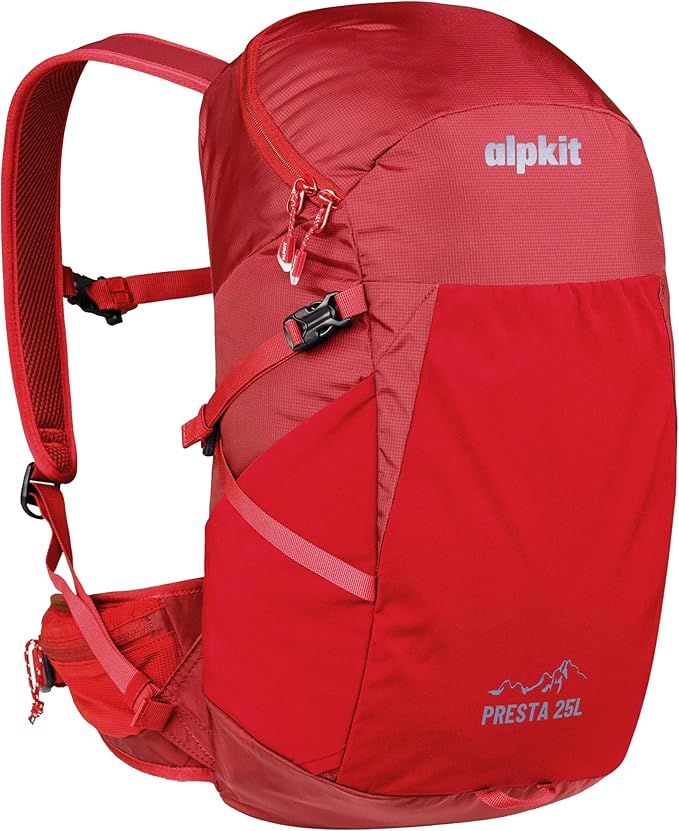
Alpkit is renowned for delivering exceptional technical value without the premium price tag. The Presta 25L is the perfect counter-point to the cheap pack regret scenario: it provides the non-negotiable stability and durability required for UK hiking at a far more accessible cost.
Featuring a robust 420D nylon base and 3D foam back system with an internal stiffener, the Presta maintains its structure and manages the load effectively—a crucial upgrade over frameless budget sacks. Its simple, slim profile is ideal for freedom of movement and efficiently handles the essential UK kit (waterproofs, mid-layer, flask) while the external mesh pockets and generous hip-belt pockets provide essential quick-access storage. If you want a pack built for the UK, without the Osprey price, this is the expert choice.
⚡️ Pros
- Outstanding Value: Delivers a technical feature set (hip belt, durable materials) well below competitors’ prices.
- Robust Construction: Hard-wearing fabric built to withstand scrapes–essential on rocky UK trails
- Streamlined and Stable: Slim profile works well for scrambling and navigation through narrow spaces.
- Highly Effective Water Resistance: Great for boggy walks.
❌ Cons
- Poor Ventilation: Back panel ventilation is minimal
- Basic Features: Lacks included rain cover (purchase separately) and fewer organisation pockets.
- Less Adjustable Fit: The fixed back length means fit may be less precise than high-end models for certain body types.
🧭 Verdict: The smart hiker’s budget choice — solid build, stable carry, and UK-ready performance for half the price.
👉 Check the latest prices at Alpkit.Com (UK) | Amazon UK
🛍️ UK Retailer Spotlight: Where to Buy and Why
Investing in the perfect daypack means prioritizing fit, which often requires a physical fitting before you commit. We know that securing the best price matters, but the risk of buying the wrong size online often outweighs the savings.
Below is our guide to the best places to find your featured pack—from specialist stores offering dedicated fitting advice to online hubs known for their competitive pricing. Use this guide to ensure you buy the correct pack, with the correct fit, the first time around.
Best UK Retailers for Testing Pack Fit & Finding Deals
| Retailer / Type | Why We Recommend It | Best For… | Link |
| Cotswold Outdoor | Large national chain with extensive stock and knowledgeable staff for measuring your torso length. Essential for trying on major brands like Osprey. | Testing Fit & Wide Selection of technical packs. | CotswoldOutdoor.com |
| Alpkit (Direct) | The exclusive home of the highly recommended Alpkit Presta. Buying direct ensures the lowest price and access to their excellent product knowledge. | Best Value & Specific Alpkit Gear. | Alpkit.com |
| Blacks & GO Outdoors | Excellent high-street presence for quickly trying on packs and comparing different back systems. Extensive stock and knowledgeable staff for fitting. Ideal for finding sales and clearance deals. | Quick Access and Finding Sale Prices. | GoOutdoors.co.uk |
| Independent Specialists | (e.g., Trekitt / Taunton Leisure) Small, dedicated shops known for highly skilled staff who provide personalized fitting and adjustment advice, crucial for maximizing load transfer. | Expert Advice and Sizing Precision for tricky fits. | Trekkit.co.uk |
🏁 Conclusion: Your Next Steps to Buying the Perfect Pack
You have now moved past the common mistake of treating a daypack as a simple sack; you understand that in the UK, it is a critical piece of safety and stability gear. The single most important takeaway from this guide is: Never compromise on fit and frame stability. A few pounds saved on a cheaper pack is not worth the risk of a shifting load throwing your balance on wet, exposed terrain.
Now that you know precisely what features the UK demands, take confidence in your choice. Stop walking with regret and start hiking with confidence—select your ideal pack from our top recommendations above and focus on the views, not the ache in your shoulders.
❓ Frequently Asked Questions
Q: What is a good capacity for a beginner’s hiking daypack in the UK?
A: A 25-litre pack is the ideal starting point for a beginner in the UK. It offers enough volume to comfortably carry mandatory safety layers, a map, compass, food, and water year-round, without being so large that it encourages you to over-pack.
Q: Should I buy a pack with a built-in rain cover?
A: Yes, a built-in rain cover is useful for sudden showers, but do not rely on it exclusively for full protection. Always use a dedicated waterproof dry bag (pack liner) inside your pack for absolute assurance that items like your spare fleece and electronics will stay dry during persistent British rain.
Q: How tight should my daypack hip belt be?
A: The hip belt should be snug enough to sit securely over the top of your hip bones, allowing you to feel about 70-80% of the pack’s weight resting there. If the pack starts slipping down or the weight feels entirely on your shoulders, the hip belt is too loose or the pack is the wrong size for your torso length.
Q: How do I measure my torso length for a daypack?
A: Short answer. Measuring your torso length is vital, as it determines where the hip belt sits. You need a friend and a flexible tape measure. Find the bony protrusion at the base of your neck (C7 vertebra) and the top of your hip bones (iliac crest). The distance between these two points is your torso length. This measurement ensures your pack’s hip belt carries the load (approx. 70%) correctly, resting on your hips, not your waist.
👉 Pro Tip: If all that sounds a bit too technical don’t worry, our expert guide: How to Measure Your Torso for a Backpack (UK Guide) will help show you step-by-step.
Q: What is the most important UK-specific feature?
A: Stability and Durability. In the UK, the variable weather and technical terrain (bog, steep slate) demand a pack that doesn’t shift. This means prioritizing a proper frame system and padded hip belt for load stability over ventilation or ultra-lightweight designs. Secondly, strong weather-resistant fabric is crucial—even if you use a rain cover, the pack itself must withstand constant drizzle and abrasion.