


There’s nothing quite like heading out for a day on the trail — that satisfying crunch of boots on path, the freedom of travelling light, and the promise of a good view (and maybe a pub lunch). But the difference between a perfect hike and a miserable one often comes down to what’s in your pack.
UK Day Hike Essentials, Tips & Checklist
This is your reference guide to what to take on a day hike in the UK — a detailed checklist of day hike essentials that every walker should carry, whatever the weather or terrain.
If you’re new to hiking, head over to our Beginner’s Guide to Hiking in the UK for step-by-step advice, or explore our Hiking Skills Hub for more in-depth tips on kit, safety, and planning your next walk.
The Day Hike “Essentials” You Can’t Forget
No matter where you’re hiking — a gentle walk in the South Downs, a blustery stretch along the Welsh Coast, or your first Scottish Munro — some items are non-negotiable. These day hike essentials will keep you safe, comfortable, and ready for the ever-changing British weather. Pack them every time, and you’ll enjoy the trail with confidence rather than surprises.
🧭 Navigation and Safety Gear
When hiking, your gear list should prioritise safety above all else. While a beautiful trail and good weather are ideal, reliable navigation tools and a well-stocked first aid kit are non-negotiable essentials. They are your best defense against unexpected changes in terrain, visibility, or injury, ensuring you can confidently return home from any UK trail, no matter the conditions.
-
OS Map & Compass
The most reliable navigation tools you own. GPS can fail; paper never does. Even a google maps printout is better than nothing. -
Phone (fully charged)
For quick checks and emergencies. Download offline maps before setting off – you may not have a signal in many areas later. Also store key contacts like local mountain rescue numbers just in case. -
Power Bank & Short Cable
Small, light, and a lifesaver when your phone battery drops below 20%. -
First-Aid Kit
Include plasters, blister care, tape, pain relief, and any personal meds. -
Headtorch
Daylight goes quickly, especially in winter, and don’t forget to take spare batteries or charging lead for your battery bank. -
Whistle
Essential in an emergency, works when your voice won’t. Often included on a daypack chest strap. -
Emergency Blanket or Bivvy Bag
These take up little space in you daypack and provides crucial warmth in an emergency.
🌧️ Weatherproof Clothing: Dressing for the UK’s Unpredictable Trails
If there’s one thing every hiker learns fast, it’s that British weather does exactly what it wants. One minute you’re basking in sunshine, the next you’re getting lashed by sideways rain that feels like it’s coming from all directions. That’s why your waterproofs are every bit as important as your map and compass. Ditch the bulky ski jacket — the real trick is layering: thin, breathable pieces that work together to keep you warm, dry and ready for whatever the clouds throw at you.

This is your final line of defence against a proper downpour. A good waterproof shell isn’t optional—it’s essential. Go for a lightweight, technical jacket built for movement, not fashion, because when the heavens open, it’s the most valuable bit of kit you’ll carry when deciding what to take on a day hike.
Your outer shell keeps the rain out, but you also need to think about what’s happening on the inside. Sweat can chill you just as quickly as a storm if it’s trapped beneath your layers. That’s where the classic Three-Layer System comes in—designed to balance warmth, breathability, and weather protection. Here’s how to put it together for every UK hike, from a gentle Peak District ramble to a windswept Lake District ridge.
🧥 The Three-Layer System Explained
Think of your clothing like a team: each layer has its own job, and when they work together, you stay warm, dry and comfortable all day — no matter what the skies are plotting.
- Base Layer – Moisture Manager
This sits next to your skin and keeps sweat moving away quickly. A good synthetic or merino base layer stops that clammy feeling on steep climbs. Avoid cotton — it holds moisture and cools you down fast once you stop moving. - Mid Layer – The Insulator
Your mid layer traps warmth without overheating you. Fleece jackets or lightweight insulated pieces (synthetic or down) are ideal. They add warmth when you need it and can easily be stowed if the day warms up. - Outer Layer – The Weather Shield
This is your armour against the elements. A quality waterproof shell (ideally breathable and seam-sealed) keeps wind and rain out while letting sweat escape. Wind-proofing matters – even on “dry” days, windchill can drop the temperature fast, especially on summits and hills.
Look for jackets with pit zips, adjustable hoods and storm flaps – small details that make a big difference on soggy summits. Two popular beginners choices are the Rab Downpour Eco or Berghaus Paclite 2.0.
💡 Quick Tip: Even if the morning looks clear, always pack your waterproof shell. British weather can turn faster than you can say “brew break,” and the best jacket is the one you actually brought with you.
🥾 Beyond Layers: Other Weatherproof Essentials
Layering keeps your core protected, but real comfort on a British hike depends on the details. Here are the other key bits of kit that make the difference between grinning through a downpour — and trudging back to the car park, cold and miserable.
- Choose Footwear for the Terrain
Trail shoes are great for firm, well-drained paths, but once you hit boggy ground, peat, or upland trails, switch to waterproof boots with solid grip and ankle support. Wet feet drain your energy fast. - Hat & Gloves – Carry them all year. Even in summer, a summit breeze can bite harder than you expect. Lightweight, wind-resistant options are easy to stash in a pocket or top lid.
- Spare Layer – When the temperature drops — or when you stop for lunch — having an extra fleece or lightweight insulated jacket adds both warmth and safety. It’s one of those items you’ll rarely regret packing.
- Carry Spares – A dry pair of socks or gloves can turn a miserable moment into a morale boost. It’s a small bit of extra weight that pays back every time the weather turns foul.
👉 Staying dry and warm isn’t just about comfort — it’s about safety. With the right layers and weatherproof extras packed, you can focus on the walk itself rather than the forecast. Now that you’ve got your clothing system sorted, let’s move on to what else deserves a spot in your day pack.
🍎 Food and Hydration: Keeping You Going All Day on the Trail
Even the best boots won’t get you far if you run out of energy or water. Having a solid food and hydration plan keeps your pace steady, your spirits high, and your body working as it should. Most UK day hikes don’t require elaborate meal plans, but a little foresight goes a long way. Bring a mix of slow-release carbs (wraps, flapjacks) and quick sugar boosts (chocolate, jelly babies).
What Food & Snacks to Pack for a Day Hike
- Balanced Snacks
Mix quick carbs with slow-release energy. Think oat bars, nuts, dried fruit, trail mix and a few sweets for quick boosts when the climb bites. - Proper Lunch
A filled wrap, sandwich, or pasta salad travels well. Include protein (cheese, tuna, or hummus) to keep you full through the afternoon. - Real Food Wins
Skip the temptation to live off chocolate bars. Real, familiar food keeps your stomach settled and energy steadier over long miles. - Emergency Rations
Always carry a small backup—an energy gel, flapjack, or protein bar—for when your planned stops go out the window as they often do!
How to Stay Hydrated on Your Day Hike
- Start Hydrated
Drink before you set off. Beginning slightly dehydrated is one of the easiest ways to tank your energy early. - Carry Enough Water
For most UK day hikes, aim for 1.5–2 litres depending on distance, weather, and how much you sweat (yes really). - Sip, Don’t Gulp
Drink little and often—every 20–30 minutes—to avoid both dehydration and that sloshy stomach feeling. - Add Electrolytes (Optional)
On hot days or long climbs, a dissolvable electrolyte tab in your water bottle helps replace salts and keeps cramps at bay.
⚠️ Refill Safely – Streams and tarns might look crystal clear, but that doesn’t mean the water’s safe to drink. On remote routes, carry water purification tablets or, better still, a compact water filter such as the Sawyer Mini, Lifestraw or Katadyn BeFree so you can refill safely on the go.
💳 Don’t Forget These Personal Essentials for Your Day Hike
Even on a short day out, it’s often the little things that make a big difference — from paying for a cup of tea in a village café to cleaning muddy hands after a snack stop. These small personal items don’t weigh much, but they’ll make your hike smoother, safer, and more comfortable.
- Cash / Contactless & ID
Keep a small amount of cash as well as a card or phone for contactless payments. Rural car parks, honesty boxes, and small cafés often still prefer cash and coins. (we always carry £10 in coins on every hike) -
Tissues & Hand Gel
Essential for quick hygiene breaks or muddy lunches on the go. - Toilet Trowel
No one likes to talk about going to the toilet on a hike, but sometimes when your miles from civilisation it’s your only option. -
Rubbish Bag
A simple zip-lock or small dry bag works well. Pack out everything you bring in — Leave No Trace isn’t optional. -
Personal Medications
Don’t forget to pack any daily medication, plus pain relief tablets and blister plasters just in case. -
Emergency Contact and Medical Info
A small card in your pocket or inside your phone case with your name, ICE numbers, and key medical details. Even a small handwritten one is better than nothing and could prove vital in an emergency. -
Lip Balm & Sunscreen
The British weather might be unpredictable, but windburn and UV still catch many hikers out.
👉 Pro Tip: Keep these items in an easy-access pocket or small organiser pouch within your pack. Even a small zip-lock bag from IKEA works — it saves rummaging when the rain rolls in or you just need a tissue fast.
🎒 The Overlooked Essential – Your Backpack
A good daypack isn’t just a bag — it’s part of your comfort system. Get it right, and you’ll barely notice it on your back; get it wrong, and every mile will remind you. For UK Day Hikes, a capacity of 18–30 litres hits the sweet spot between carrying the essentials and staying light.

The forgotten essential: A properly fitted daypack, like this 24L Osprey Stratos, distributes weight across the hips and back, ensuring every mile feels comfortable and not a miserable slog.
Here’s what to look for:
-
Fit & Support
Padded shoulder straps and a hip belt are non-negotiable. They distribute weight evenly and prevent sore shoulders. Try before you buy — a good pack should hug your back, not sway with every step. -
Organisation
Keep it simple. One main compartment, a quick-access lid or front pocket, and small hip-belt pockets for snacks or a phone are all you really need. -
Weather Protection
A built-in rain cover is handy, but even better is using dry bags inside to keep your gear properly waterproof in a downpour. -
Hydration
Pick a setup that suits your style: a bladder sleeve with a hose port for easy sipping on the move, or roomy side pockets for water bottles.
Trusted brands like Osprey, Deuter, Arc’teryx, and Lowe Alpine all make daypacks that balance comfort, durability, and weather resistance — ideal for British conditions.
👉 If you don’t have a daypack yet or you’re looking to upgrade – Check out our in-depth guide: Best Hiking Daypack UK 2025: Ultimate Expert Guide & Top Picks.
➕ Day Hike Useful Extras
These aren’t essential, but they’ll make many hikes more enjoyable:
-
Walking PoleHelp with balance and reduce impact on knees, especially on descents.
- Sit Mat – A dry, warm spot for lunch. No one likes sitting on a cold rock or wet grass.
-
Buff or Neck Gaiter – Adds warmth, sun protection, or works as a headband.
🧕🏻 The Loaded Backpack girls wear them on every hike, whatever the weather. - Gaiters
Love them or not, they’re worth it on boggy ground or wet moorland. -
Repair Tape & Zip Ties
Quick fixes for broken straps or torn jackets. Some “gaffer tape” wrapped around an old credit card take little room in you daypack -
Small Multitool
Handy for those little gear repairs. Victorinox (Swiss Army) and Leatherman are both great options. -
Camera
If you’ll actually use it. Sometimes a phone’s enough. Keep it easily accessible in a hip belt pocket or clipped onto your pack. -
Spare Socks
Few things feel better than dry feet halfway through the day. Many hikers class this as an essential item (we do!)
⛰️ Upgrades for Hillwalking & Moorland Adventures
When your route climbs higher or crosses wilder ground, the margin for error narrows — and the conditions can change in minutes. A few smart upgrades make all the difference in comfort and safety.
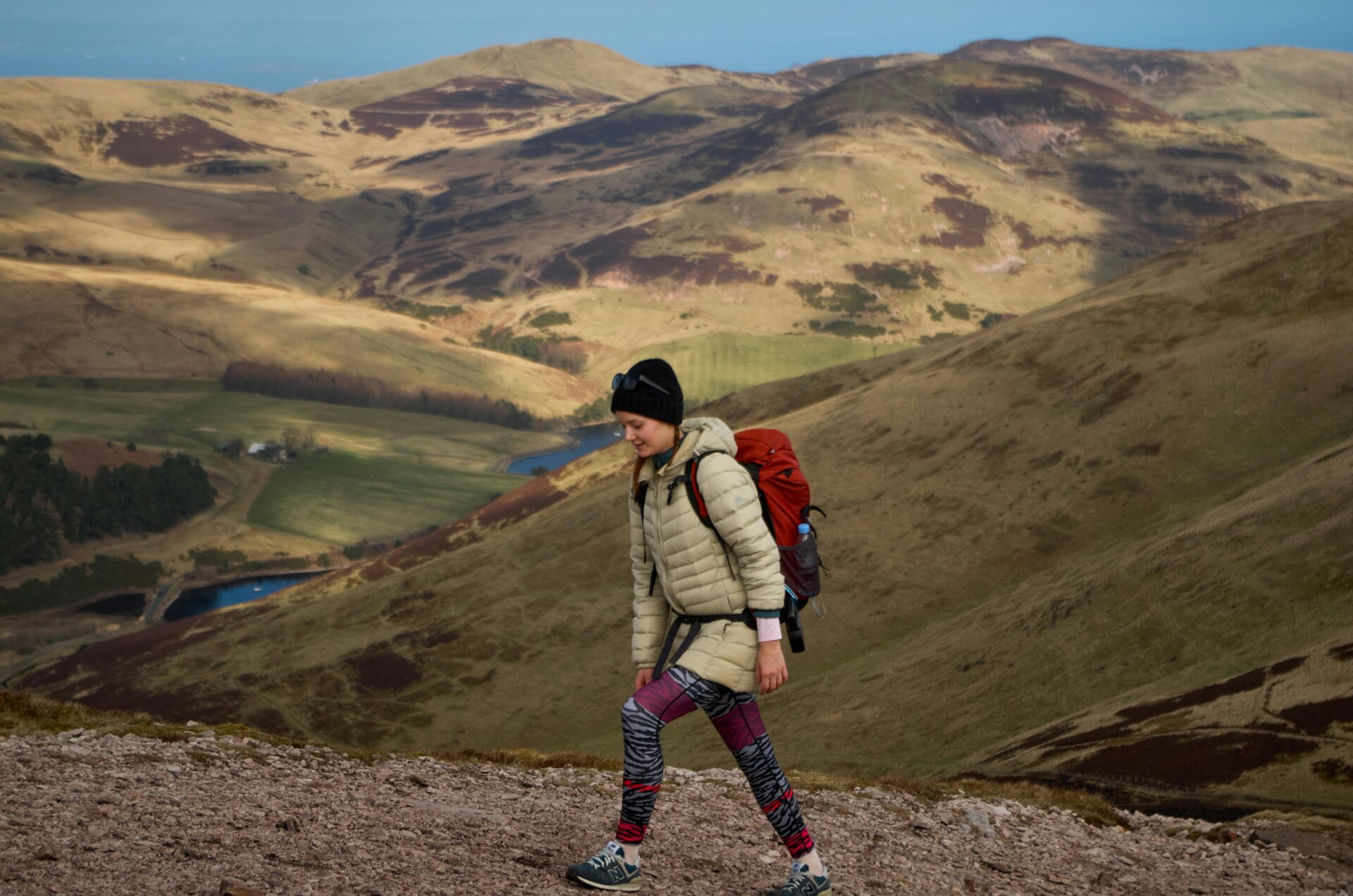
British fells are exposed. The gear you see here—especially the warm layers and proper daypack capacity—is the minimum safety equipment required when planning what to take on a day hike in the highlands.
On the exposed fells and moors, the old adage is true: if you need a specific piece of equipment, you likely needed it five minutes ago. The sudden arrival of wind-chill, fast-moving cloud, or boggy conditions can quickly turn a pleasant stroll into a serious situation. When tackling routes above the tree line, you must upgrade your planning and what you pack.
These items and essential safety habits are what experienced UK mountain hikers rely on, ensuring you’re equipped not just for the weather you start with, but for the potentially severe weather you might finish in.
Non-Negotiable Safety Habits & Planning
These are the essential steps you must take before you even lace up your boots.
- Check the Mountain Forecast – Always review MWIS or the Met Office websites before heading out; it’s the single best safety habit you can form, as conditions can differ vastly from valley to peak.
- Navigation Confidence – Keep your map dry in a waterproof case, and refresh your compass skills before you go. Whiteouts and mist can roll in faster than you think, making basic navigation crucial.
Essential Backup Layers & Emergency Kit
Always pack with the worst-case scenario in mind. These items stay at the top of your pack and provide crucial protection if you have to stop.
- Emergency Layer – A lightweight insulated jacket or a survival bivvy/bag can buy crucial warmth and shelter if you or a companion are forced to stop in bad weather.
- Extra Warmth & Light – Pack a spare pair of gloves, a warm hat (even in summer), and a brighter, fully charged headtorch for shorter winter days or unexpected delays.
Traction & Terrain-Specific Gear
When tackling steep or boggy ground, the right gear can prevent slips, falls, and wet feet.
- Footwear Upgrade – Swap lighter trail shoes for sturdy boots with ankle support and a reliable deep-lug sole (e.g., Vibram). On UK wet and rocky trails, grip is everything.
- Gaiters & Poles – Gaiters are invaluable for boggy moorland and peat hags, keeping water and mud out of your boots. Hiking poles offer stability and reduce strain on steep, uneven hillsides.
💡 Day Hike Packing Tips
Even a well-chosen pack can feel awkward if it’s loaded badly. These smart packing habits – learned from experience on trail, make all the difference — keeping your gear dry, balanced, and easy to reach when it matters.
-
Keep Essentials Accessible – Map, compass, snacks, gloves, and headtorch should live near the top. If you can grab them without unpacking, you’ve done it right.
-
Pack Layers for the Weather – Waterproofs go on top or in the front pocket for quick access — trust me, digging through your bag in the rain is definitely not fun!
-
Organise by Theme – Group clothing, food, first aid, and electronics into separate bags. A few lightweight dry bags in various colours or packing cubes make it easy to find things fast.
-
Balance the Load – Heavier items go close to your spine for stability; lighter gear fills the outer spaces.
-
Adjust for the Season – Add a warm layer like a down jacket in winter, or prioritise hydration and sun protection in summer.
🎒👉 When your pack’s dialled in and the essentials are where they should be, the miles pass easier and the walk feels lighter. These fundamentals are the base of every good hike — so before you set off, check out our Beginner Hiking Guides or our Expert Guide to the Best Hiking Daypack UK in 2025 for more detailed advice.
🗒️ Day Hike Packing Checklist (Quick Reference)
Use this list to double-check your kit before every walk — Your checklist progress is saved automatically in your browser, so you can come back anytime and pick up where you left off or download our interactive and printable PDF version.
👉 Top Tip: Why not Bookmark this checklist for next time.
🧭 Navigation & Safety Gear
🌧️ Weatherproof Clothing & Footwear
⚠️ Avoid cotton — it holds moisture and chills quickly.


