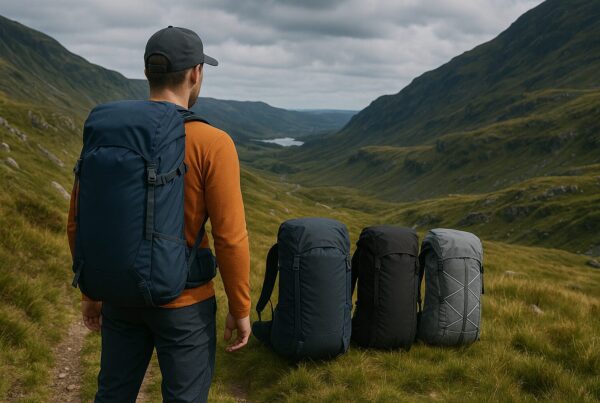
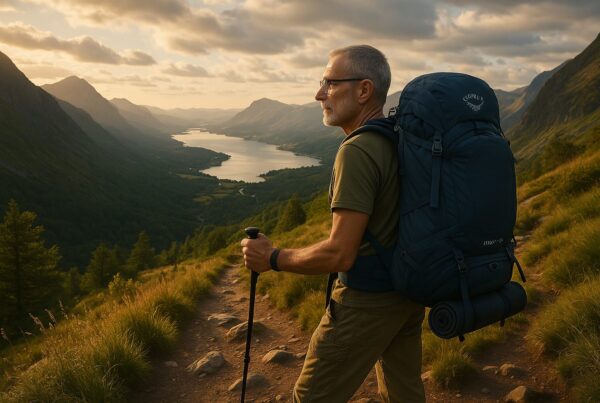
If you’re planning a long-distance hike in Scotland—whether it’s the famous West Highland Way, the rugged Cairngorms, or wild camping in the Highlands—your backpack is the single most important piece of gear you’ll carry.
The best backpack for multi-day hikes in Scotland needs to be comfortable, weatherproof, and big enough to carry all your essentials without weighing you down.
In this hiking backpack guide, we’ll cover how to choose the right pack, what features to look for, and which backpacks are best suited for Scottish long-distance trails.
Why the Right Backpack Matters in Scotland
Multi-day hiking in Scotland is a unique experience. Scotland’s breathtaking landscapes are stunning, but the terrain is tough and the weather unpredictable. In one day, you might face heavy rain, strong winds, and bursts of sunshine. A poorly fitting or unsuitable backpack can turn an epic adventure into a painful struggle —so choosing wisely matters.
1. Fit and Comfort: The Foundation of a Good Pack
Before thinking about features, start with fit. The best hiking backpacks for Scotland will feel like an extension of your body. No matter how fancy the features, a pack that doesn’t fit will ruin your hike.
- Start by measuring your torso length to find the right size. This is the distance between the bony bump at the base of your neck and the top of your hip bones (Learn how to measure your torso for a backpack).
-
Adjustable torso systems: Many packs come with adjustable torso lengths that allow the pack to be fine tuned to your needs.
-
Gender-specific designs: Many of the most popular backpacks are available in women specific versions, such as Osprey’s Kyte for women and Kestrel for men. These packs often have narrower shoulder straps and shorter torso lengths, ensuring a snug, personalised fit, which can make a huge difference in comfort.
-
Padded hip belt: Most of the weight should rest on your hips, not your shoulders. A padded, adjustable hip belt is therefore essential to take most of the weight off your shoulders.
-
Try before you buy: Most hiking retailers have special dummy weights you can place into a pack to get a feel for how it will be when fully loaded.
👉 Pro tip: Always try on your backpack fully loaded before your trip.
2. Backpack Size: How Many Litres Do You Need?
“What Size Backpack for the West Highland Way” is the most often asked backpacking question for multi-day hikes in Scotland. Invariably your backpack size (capacity) depends on whether you’re staying in accommodation or wild camping:
-
35–50L – Great for shorter 2–3 day hikes or if you’re staying in B&Bs or hostels.
-
50–70L – The sweet spot for the West Highland Way or longer treks where you’ll need a tent, sleep system, stove, and food supplies.
-
70+L – Generally only for winter hikes or if carrying group gear.
👉 FYI: Most hikers tackling Scotland’s long-distance trails choose 45–65L packs.
3. Weatherproofing: Scotland’s Essential Backpack Feature
Scotland is famous for its “four seasons in one day.” Rain is almost guaranteed in Scotland, so water protection is non-negotiable.
-
Look for durable water-resistant fabrics like ripstop nylon.
-
Choose a pack with an integrated rain cover—though many hikers add a Pack Liner or Dry Bags inside for extra security.
-
Reinforced zippers and seams help your backpack withstand bogs, scrambles, and rough paths.
4. Ventilation and Suspension: Stay Comfortable on the Trail
Even in cooler weather, carrying a heavy load makes you sweat. Good suspension and airflow are key.
-
Ventilated back panels reduce sweat build-up.
- Good suspension systems distribute weight evenly, reducing fatigue on long days.
-
Load lifters, sternum straps, and strong hip belts all help keep weight stable, which is especially important in Scotland’s windy glens and on exposed ridges.
5. Organisation and Accessibility
The best backpacks for Scotland hikes let you grab gear quickly without unpacking everything.
-
Top, side, or bottom access options save time on the trail. Side entry in particular allows you (or a fellow hiker), to grab an item without having to unload the whole pack.
-
Stretch mesh side pockets are perfect for water bottles.
-
Front shove-it pocket (common on Osprey packs) is ideal for stashing a wet waterproof jacket.
-
Hydration bladder sleeve helps you sip water without stopping.
-
Trekking pole attachments are handy for steep Highland climbs.
6. Weight vs. Durability
Scotland’s rugged terrain requires a balance between lightweight and tough.
-
Ultralight packs (under 1kg) are great for experienced ultralight hikers but may sacrifice durability and are generally more expensive.
-
For most trekkers, a 1.2–2.0kg pack provides the best balance of comfort and toughness.
7. Best Backpacks for Multi-Day Hikes in Scotland
Here are some tried-and-tested packs popular with hikers on the West Highland Way and other Scottish trails:
-
Osprey Kestrel 48 / Kyte 48 – Durable, comfortable, comes with a rain cover. Excellent all-rounder.
-
Osprey Exos 58 / Eja 58 – Ultralight, great ventilation. Perfect for weight-conscious hikers.
- Osprey Atmos AG 65 / Aura AG 50 – Extremely comfortable, feature rich pack. Great for heavier loads.
-
Montane Trailblazer 44 – Montane Trailblazer 44 Lightweight, body-hugging design. Great for fastpackers and wild campers.
-
Deuter Aircontact Lite 50+10 – Sturdy suspension, extra capacity. Another good choice for heavier loads.
👉 On Trail Experience: I have hiked the West Highland Way with each of the three Osprey packs and bagged several peaks with the Montane pack, and I have no hesitation recommending any of them. 🙏 See our full round-up of the Best High-End Backpacks For UK Backpacking in 2025
8. Packing Tips for Scottish Hikes
Even the best backpack won’t help if you pack badly. Keep these tips in mind:
-
Pack the heaviest items close to your back for balance.
-
Use dry bags to separate and waterproof your gear—rain has a way of finding every gap..
-
Keep rain gear and snacks in outer pockets for quick access.
-
Always test your packed backpack on a shorter hike before setting off for a week on the West Highland Way.
9. FAQ: Backpacks for Hiking in Scotland❓
Q1. What size backpack do I need for the West Highland Way?
For most hikers, a 45–60 litre backpack is ideal for the West Highland Way. If you’re staying in hostels or using baggage transfer services, a 35–40L pack may be enough. If you’re wild camping in Scotland, go for 55–65L to carry your tent, stove, and food.
Q2. Do I need a waterproof backpack for Scotland hikes?
Yes. Scotland’s weather is unpredictable, so choose a backpack with a rain cover or line the inside with a dry bag. A water-resistant fabric like ripstop nylon plus extra waterproofing is the best way to keep your gear dry on multi-day hikes.
Q3. What is the best backpack brand for hiking in Scotland?
Popular choices include Osprey (Kestrel, Kyte, Exos, Eja), Montane (Trailblazer series), and Deuter (Aircontact Lite). These brands are durable, comfortable, and well-suited to long-distance Scottish trails like the West Highland Way and Great Glen Way.
Checkout our guide to the Best High-End Backpacks For UK Backpacking
Q4. How heavy should my backpack be for multi-day hiking in Scotland?
A fully loaded backpack for a multi-day trek in Scotland should ideally weigh no more than 15–18 kg, including food and water. Lighter is better—especially on long-distance hikes where rough terrain and boggy paths can slow progress.
Q5. Can I hike the West Highland Way with a 40L backpack?
Yes, but only if you pack light and plan to stay in hostels or B&Bs. If you need to carry camping gear, a 40L backpackwill likely be too small. For most hikers, 50–60L is the safest choice.
Final Thoughts
In Scotland, where landscapes are wild and weather is unpredictable, your backpack is more than gear—it’s your lifeline. Choosing the best backpack for Scotland multi-day hikes means prioritising fit, weather protection, and comfort. A well-fitted, weatherproof, and properly packed 45–65L backpack will set you up for success on trails like the West Highland Way, Great Glen Way, or Cape Wrath Trail.
Get your backpack choice right, and Scotland’s misty glens, rugged peaks, and wild lochs will feel like a true adventure rather than a test of endurance.