


Choosing the Correct Backpack Size (UK Guide)
When it comes to hiking and backpacking in the UK, a good backpack can make the difference between a joyful adventure and a painful slog. One of the most important — and often overlooked — steps in choosing the right rucksack is measuring your torso correctly.
An ill-fitting pack won’t just feel uncomfortable; it can cause sore shoulders, back pain, and even long-term injury if you regularly hike with poor weight distribution.
This guide will walk you through why torso length matters, how to measure it step-by-step, and provide a handy UK sizing chart to help you choose the right pack.
Why Torso Measurement is Crucial
Backpacks are designed to sit on your hips, not hang from your shoulders. When the torso length of the backpack matches your body, the hip belt carries most of the weight, leaving your shoulders free for balance and movement.
Downsides of an improper fit:
-
Too short: The hip belt rides too high, causing sore shoulders and poor load transfer.
-
Too long: The hip belt sits too low on your hips, reducing stability and making the pack feel heavier than it really is.
-
Overall effect: Discomfort on the trail, slower pace, and increased risk of fatigue and injury.
👉 A well-fitted pack = less strain, better posture, and more enjoyable miles.
How to Measure Your Torso (Step-by-Step)
You’ll need:
-
A flexible tape measure
-
A friend to help (recommended, though you can do it alone with care)

Steps:
-
Find the C7 vertebrae – Tilt your head forward; the bony bump at the base of your neck is your C7.
-
Locate your iliac crest – Place your hands on top of your hip bones; draw an imaginary line across your back between them.
-
Measure the distance – Ask your helper to measure from the C7 vertebrae straight down the spine to the line across your iliac crest.
-
Record your torso length – Note it in centimetres (and inches if you like, as many pack brands list both).
Torso Length to Backpack Size Chart (UK)
Every brand varies slightly, but most UK rucksack makers (Osprey, Berghaus, Lowe Alpine, etc.) follow these general guidelines:
| Torso Length (cm) | Torso Length (inches) | Pack Size |
|---|---|---|
| 38 – 43 cm | 15 – 17 in | Small |
| 43 – 48 cm | 17 – 19 in | Medium |
| 48 – 53 cm | 19 – 21 in | Large |
| 53+ cm | 21+ in | Extra Large* |
* Some brands adjust by hip belt length instead of torso size, so always double-check before buying.
Most popular backpack manufacturers stitch a Fit and Size label onto their packs so you can double check the size. This is also a great way to get the right pack when buying second hand.
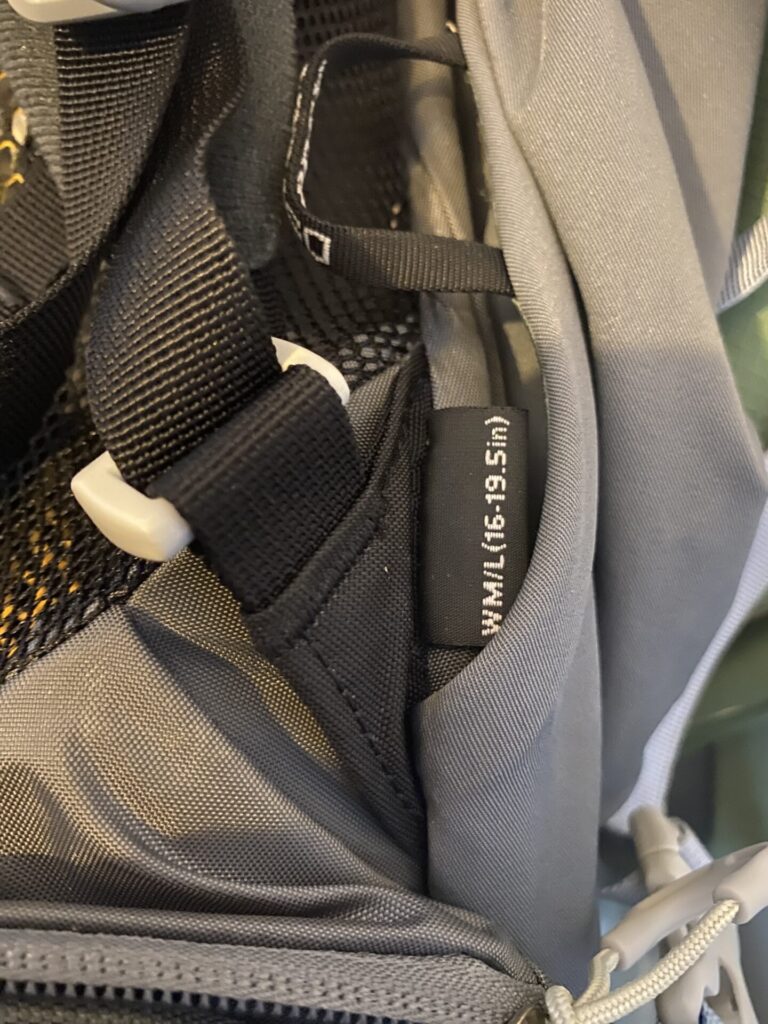

💡 Hiker’s tip: If you fall between two sizes, try both on with weight inside. Comfort beats numbers every time!
Final Thoughts
Measuring your torso for a backpack may only take a couple of minutes, but it can save you hours of discomfort on the trail. With the right fit, your pack becomes an extension of your body — stable, comfortable, and ready to carry you across the fells, moors, and mountains of the UK.
So grab a friend, take your measurement, and make sure your next backpack is the perfect match. Your shoulders and back will thank you on every mile.


