Introduction
There’s something timeless and deeply liberating about wild camping. Waking up to the first light spilling across a remote valley, brewing a coffee while the mist clings to the fells, and knowing you’ve carried everything you need on your back—this is the essence of adventure for many UK hikers.
But for all its romanticism, wild camping in the UK sits in a complex space between tradition, law, and personal responsibility. For beginners, the question is often simple: “Is wild camping legal in the UK?” For seasoned backpackers, the challenge becomes how to practise wild camping in a way that protects our fragile landscapes and keeps the freedom alive for others.
This guide breaks down the current wild camping UK laws, regional differences, and best practices for wild camping in the UK. It’s designed to give clarity and confidence—so that whether you’re pitching a tent on the slopes of Ben Nevis, bivvying on the Pennine Way, or considering a Dartmoor overnighter, you’ll know both your rights and your responsibilities.
Where is Wild Camping Legal in the UK?
Wild camping laws differ significantly across the UK’s four nations. Knowing the distinction is essential before heading out.
Quick Comparison of Wild Camping Rights
| Nation | Legal Position | Key Points | References |
|---|---|---|---|
| Scotland | Legal under the Land Reform (Scotland) Act 2003 | – Right to camp on most unenclosed land – Must follow Scottish Outdoor Access Code – Some areas (e.g., Loch Lomond) require permits |
Scottish Outdoor Access Code |
| England | Illegal without landowner permission | – Civil trespass if caught – Exception: mapped areas of Dartmoor (with restrictions) – Discreet camping often tolerated in uplands |
gov.uk, Dartmoor NPA |
| Wales | Illegal without landowner permission | – Same rules as England – Discreet camping tolerated in remote parts of Snowdonia (Eryri) and Brecon Beacons (Bannau Brycheiniog) |
gov.uk |
| Northern Ireland | Illegal without landowner permission | – Stricter land ownership laws – Wild camping rare, but some landowners grant permission – Focus on organised campsites and bothies |
gov.uk |
Scotland – Freedom with Responsibility

Wild Camping in Scotland is permitted in most areas.
Scotland offers the most generous access rights in the UK, thanks to the Land Reform (Scotland) Act 2003 and the Scottish Outdoor Access Code (SOAC). These give the public statutory rights to camp on most unenclosed land, including moorland, forest, and many lochsides.
However, these rights come with responsibilities. Campers must follow the SOAC, which outlines:
-
Small-scale camping (a few nights, small groups).
-
Keeping away from roads, buildings, and farmland.
-
Practising Leave No Trace principles.
Some “hotspot” areas—such as around Loch Lomond—now operate seasonal camping management zones where permits are required to prevent environmental damage (Loch Lomond & The Trossachs National Park).
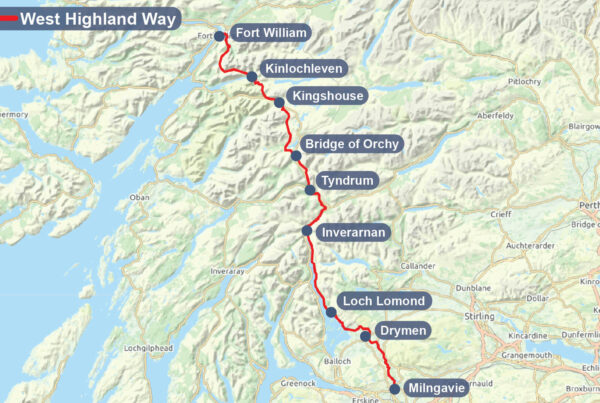
💬 On the West Highland Way in 2021, I pitched on the banks Loch Lomond where the midges were so thick I had to eat my dinner inside the tent. Scotland might give you legal freedom to camp, but the real challenge there is often the wildlife—midges being the fiercest opponent!
Authoritative source: Scottish Outdoor Access Code
Dartmoor National Park – England’s Unique Exception
For years, Dartmoor was the only place in England where wild camping was legally permitted without landowner consent, under a long-standing local understanding.
In January 2023, a High Court ruling briefly overturned this right, declaring that wild camping was not included in the Dartmoor Commons Act 1985. Following public outcry and negotiation, Dartmoor National Park Authority reached agreements with major landowners to reinstate a form of permitted wild camping on parts of the moor (Dartmoor NPA guidance).
Key points:
-
Only permitted in specific mapped areas.
-
Must follow strict guidelines (no large groups, no fires, leave no trace).
-
Always check the Dartmoor National Park Authority website before heading out.
💬 I’ve only camped on Dartmoor once, and there’s a raw, lonely beauty about it. That one night, wrapped up against a howling wind, I felt the ground vibrate slightly as wild ponies thundered past in the dark. I won’t lie; it scared the everliving @&%$ out of me! That memory stays with me every time I visit — Dartmoor always feels alive and slightly scary.
England, Wales & Northern Ireland – Permission Required
Elsewhere in England, Wales, and Northern Ireland, the law is clear: wild camping without landowner permission is trespass.
-
Trespass is a civil offence, not a criminal one, meaning it’s usually resolved by being asked to move on.
-
Some landowners may grant permission if asked politely in advance.
-
National Parks and Areas of Outstanding Natural Beauty (AONBs) do not automatically grant camping rights.
Despite this, discreet and responsible wild camping is quietly tolerated in upland areas like the Lake District, Snowdonia (Eryri), and the Brecon Beacons (Bannau Brycheiniog). The golden rule: arrive late, leave early, and remain invisible.
💬 On the Pennine Way, I tucked my tent behind a dry-stone wall to avoid being too visible. In the morning, a farmer passed by with his sheepdog. Instead of asking me to leave, he nodded and said, “As long as you’re gone by nine.” That simple exchange taught me how much goodwill can matter.
Authoritative source: gov.uk – Rights of way and access
Wild Camping & the Law: Key Considerations
Understanding the legal framework helps hikers avoid misunderstandings:
-
Civil vs Criminal: Trespass is civil in England, Wales, and NI, but refusing to move when asked can escalate.
-
National Parks: Offer public access to walk, but not to camp. Each park authority issues guidance (see National Parks UK).
-
Case Law: The Dartmoor ruling (2023) highlighted how fragile access rights can be. The outcome shows the balance between tradition, law, and landowner power.
-
AONBs: These areas prioritise conservation but do not expand access rights.
💬 I’ve only ever been asked to move once, at around 5am in the Welsh Valleys. The landowner (clearly angry), was polite but firm. I apologised, packed quickly, and walked a couple of miles before finding another spot. It wasn’t pleasant, I felt completely embarrassed, and stupid for choosing a spot where despite the amazing view, I could clearly be seen for miles. Lesson learnt — it reinforced the importance of staying discreet and respectful.
Best Practices: The “Leave No Trace” Approach
Wild camping isn’t just about where you can legally pitch—it’s about how you camp. The Leave No Trace philosophy is central to ensuring wild camping remains sustainable and tolerated.
Choosing a Site
-
Pitch out of sight of roads, houses, and farm buildings.
-
Avoid sensitive habitats (peat bogs, wetlands, fragile grasslands).
-
Choose durable ground such as grass or gravel.
💬 I once made the mistake of camping close to a small stream in the Lake District. Overnight rain turned it into a torrent, and by morning my groundsheet was afloat. Since then, I always pick slightly higher ground, even if the view is better lower down.
Timing
-
Arrive late in the day, ideally near dusk.
-
Leave early the next morning.
-
Never overstay (one or two nights at most).
Fires & Cooking
-
Open fires are discouraged due to wildfire risk and environmental damage.
-
Use a small gas or alcohol stove instead.
-
Place stoves on a stable surface, not directly on grass.
💬 A friend and I were camping on the Pen-Y-Fan Horseshoe in the Brecon Beacons, and watched as another group of campers a little way off, frantically tried to put out a fire. Their small campfire had spread frighteningly fast when the wind caught the dry grass. Luckily, the campers managed put it out in time—but it hammered home why stoves are the only sensible option.
Waste & Sanitation
-
Carry out all litter—including food scraps, wipes, and toilet paper.
-
For human waste, dig a small hole at least 15–20 cm deep and 30-50 metres away from water sources.
-
In popular areas, consider carrying a waste bag system.
Noise & Group Size
-
Keep groups small (ideally 1–4 people).
-
Maintain quiet to preserve the wild experience for everyone.
🔖 👉 If you’d like to dig deeper into how to apply Leave No Trace on the Trail, don’t miss our guide: Leave No Trace: The 7 Simple Rules Every UK Hiker Should Know.
Essential Gear for Responsible Wild Camping
Going light makes wild camping less intrusive, safer, and more enjoyable.
Shelter Options
-
Lightweight tents: Popular UK-ready brands include MSR Hubba Hubba, Big Agnes Copper Spur, Alpkit Ultra 1, or Terra Nova Laser 2.
-
Bivvy bags: Minimalist and discreet; ideal for solo camps.
-
Tarps: Lighter but require skill and site selection.
💬 On the Cape Wrath Trail, I tried to get by with just a tarp to save weight. One stormy night taught me a valuable lesson: sometimes the extra 700g of a proper tent is worth every ounce. – Nick (Trail Name: “Glassman“) 2020
Cooking & Fuel
-
Compact stoves (gas canisters or alcohol burners).
-
Fuel must be carried in/out—never forage for wood.
-
Windshields help efficiency on exposed ridges.
Water & Purification
-
Carry a filter (Sawyer Micro Squeeze or Katadyn BeFree) or water purification tablets.
-
Always treat water from streams and tarns.
Backpack Essentials
-
50–65L rucksack (e.g., Osprey Atmos, Osprey Kestrel, Deuter Aircontact). See our guide to the Best High-End Backpacks for UK Hiking
-
Sleeping bag rated for UK shoulder-season nights.
-
Sleeping mat for insulation.
-
Headtorch, map & compass, power bank.
Alternatives to True Wild Camping
For hikers who want the experience of multi-day journeys without the legal grey areas, alternatives exist:
Backpacker-Friendly Campsites
Many campsites in National Parks now welcome backpackers, offering simple tent pitches at low cost.
Bothies
Maintained by the Mountain Bothies Association, these unlocked shelters are scattered across Scotland, Northern England, and Wales. They are free but must be used considerately.

In wild weather, bothies offer a welcome refuge—a dry roof and a brief break from the storm.
Long-Distance Trail Stopovers
Trails such as the West Highland Way, Pennine Way, and South West Coast Path have informal stopovers, hostels, and farm fields that welcome walkers.
Final Thoughts
Wild camping in the UK is both a privilege and a responsibility. While Scotland’s open access laws provide a model of freedom, the rest of the UK remains bound by landownership traditions. For English, Welsh, and Northern Irish hikers, this means balancing respect for the law with discretion and responsibility.
Done well, wild camping offers one of the most rewarding outdoor experiences possible—an immersion in the landscapes that define Britain’s hiking culture.
💬 I still remember waking at dawn in the Lake District, watching the first light spill across the Langdale Pikes. The air was perfectly still, save for a distant skylark calling somewhere over the valley. In that quiet moment, it felt like the whole landscape was holding its breath. That’s the gift of wild camping—the freedom to truly belong to the hills, if only for a while. It’s a freedom worth protecting, and a privilege to do it right.
As UK hikers, it’s up to us to show that we can camp lightly, leave no trace, and preserve the wild spirit for the next generation.