When the Hills Become Medicine
For centuries, people across Britain have turned to the hills for something deeper than just fresh air and exercise. Writers from Wordsworth to Nan Shepherd have described the emotional release that comes with walking through wild landscapes, while modern science is finally catching up to what hikers have always known: being outdoors is good for our mental health.
In today’s fast-paced world — with screen time dominating our days and stress levels never far behind — the UK’s hills, moors, and mountains are more than just scenery. They are a refuge. Hiking in Britain is increasingly recognised as a form of natural therapy, offering relief from anxiety, depression, and burnout.
This article explores the science of why hiking supports mental wellbeing, the unique healing qualities of Britain’s landscapes, and the real-life experiences of hikers who’ve found solace on the trail. Along the way, we’ll look at practical ways you can harness the mental health benefits of hiking, whether you’re planning a weekend in the Lake District, a mindful stroll along the South West Coast Path, or a life-changing adventure like the West Highland Way.
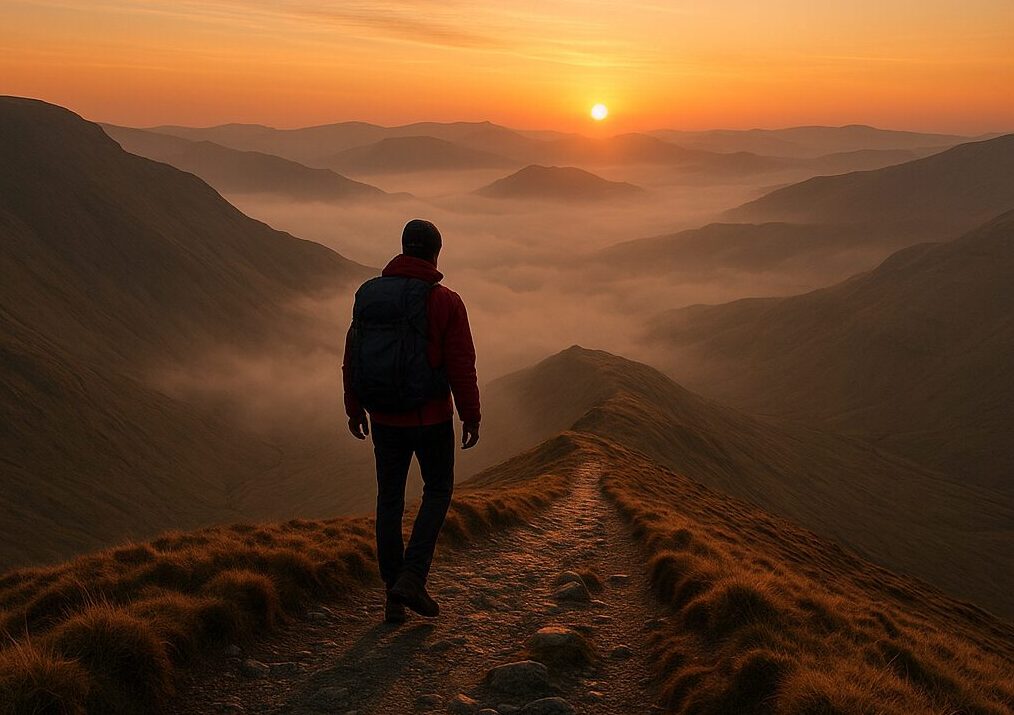
Lake District Sunrise: Space to Breathe
The Science: How Hiking Improves Mental Health
The connection between time spent in nature and improved mental health is no longer just folklore or poetic musing — it’s backed by a growing body of scientific evidence. Researchers in the UK and globally have consistently shown that being outdoors, particularly in green and wild spaces, helps regulate mood, reduce stress, and restore mental clarity.
Stress Reduction and the ‘Nature Effect’
Studies by the University of Essex — sometimes called the “green exercise” research hub — have demonstrated that as little as five minutes of outdoor activity can improve mood and self-esteem. The effect is even stronger when physical activity is combined with natural landscapes like forests, lakes, and mountains. For hikers, that’s exactly the sweet spot: movement, immersion, and scenery.
When we walk, particularly in nature, our bodies produce less cortisol (the stress hormone). At the same time, serotonin and dopamine — the “feel-good” neurotransmitters — are boosted. It’s a chemical recalibration that many hikers recognise instinctively: the feeling of stress melting away after the first mile, the weight of daily life lifting with every step upward.
Attention Restoration
Modern life bombards us with stimuli: notifications, emails, traffic, screens. Psychologists call the resulting fatigue “directed attention fatigue.” Hiking provides the antidote. The theory of “Attention Restoration” suggests that natural settings allow our brains to rest, wander, and reset. A day on the trail can feel like defragmenting your mind’s hard drive — leaving you sharper, calmer, and more creative afterwards.
Connection and Meaning
Hiking is also linked with a sense of purpose and connectedness. According to the mental health charity Mind, time outdoors helps people feel part of something bigger, reducing feelings of isolation. Trails can be solitary, but they also connect us — to nature, to history, and often to fellow walkers. Sharing a bothy in the Scottish Highlands or chatting with strangers on the Pennine Way can be unexpectedly healing moments of human connection.
The NHS Perspective
The NHS increasingly recognises walking and nature as part of holistic mental healthcare. “Green Social Prescribing” is being rolled out across parts of England, where GPs encourage patients to spend time outdoors to combat issues like depression, anxiety, and loneliness. Hiking — whether that means a Sunday ramble or a multi-day trek — fits neatly into this emerging model of preventative care.

Walking and talking: the social lift.
The UK Hills: Why Our Landscapes Heal in a Unique Way
Every country has wild spaces, but there’s something distinctive about the hills, moors, and mountains of Britain that makes them especially restorative. It’s not just about altitude or distance; it’s about atmosphere, accessibility, and history.
Scale and Accessibility
Unlike the Alps or the Rockies, Britain’s hills are modest in scale — yet that’s part of their charm. For most people, they’re within reach. From Manchester, the Peak District is less than an hour away. Londoners can be on the South Downs within 90 minutes. Even Scotland’s great ranges — the Cairngorms, the Cuillin, the Northwest Highlands — are only ever a train ride away from a city. This accessibility means the mental health benefits of the hills aren’t limited to elite adventurers; they’re open to anyone willing to lace up boots.
Variety of Landscapes
The UK offers a striking variety of terrains in a small area. One weekend you can be striding across Dartmoor’s vast, empty tors; the next you might be scrambling up a rocky ridge in Snowdonia, or walking along the chalk cliffs of the South Downs. Each landscape has its own “mood” — and many hikers report feeling that these different environments shape their emotions. Moorland solitude soothes anxiety; coastal expanses inspire freedom; mountains challenge and empower.
Weather and Resilience
Ask any UK hiker about the weather, and you’ll get a smile or a groan. Rain, wind, and mist are part of the deal. But these conditions often enhance, rather than diminish, the therapeutic effect. Battling through a squall on Kinder Scout, or waking up to find your tent dusted with frost in Glen Nevis, can forge resilience. Enduring and embracing Britain’s changeable weather can mirror the mental toughness we build against life’s uncertainties.
History and Culture
Walking in the UK is never just about the landscape. It’s about stepping into history. When you hike Hadrian’s Wall Path, you’re tracing Roman footsteps. On the Pennine Way, you walk the backbone of England that’s inspired poets for centuries. This layering of culture and memory adds a depth to hiking here that feeds the soul as well as the body. It’s grounding. It reminds us that we’re part of a longer story, which can bring perspective during times of personal struggle.
A Sense of Belonging
Finally, the hills foster belonging. National Parks, Scotland’s “right to roam,” and long-distance trails like the West Highland Way make walking part of our shared national identity. For many, being in the hills isn’t just an activity; it’s coming home.

Brecon Beacons: Resilient by Design.
Stories from the Trail: Real Hiker Experiences of Mental Health and Healing
The science explains the “why,” but it’s the stories that bring the healing power of hiking to life. Across the UK, hikers share experiences — some uplifting, some raw — that show how the hills have become a sanctuary for mental wellbeing.
Finding Calm in the Peaks
Sarah, a teacher from Sheffield, describes how regular walks in the Peak District became her lifeline after a period of severe anxiety:
“When my mind was racing and I felt trapped in my own head, heading up onto the moors gave me space. The wide horizons slowed my thoughts. I didn’t need to solve everything; I just needed to keep putting one foot in front of the other.”
For Sarah, the routine of walking — the rhythm of boots on gritstone paths — provided both escape and structure. Over time, it became her natural form of therapy.
The Challenge That Changed a Life
For others, it’s not gentle walks but big challenges that make the difference. Mark, a former soldier, took on the West Highland Way after struggling with PTSD:
“I wanted to prove to myself that I could still take on something hard. The days were tough, especially in the rain, but by the time I reached Fort William I felt lighter — like I’d left some of the weight behind on the trail.”
This echoes what many long-distance hikers report: the hardship of the trail becomes a mirror for personal struggles. By overcoming it, confidence and self-belief grow.
When the Hills Feel Heavy
It’s important to acknowledge that hiking isn’t always easy or instantly healing. Emma, a student from Bristol, found herself overwhelmed during a solo attempt on the Pennine Way:
“I thought being in the hills would clear my head, but I felt isolated and lonely. By day four, I was crying more than I was walking. It taught me that hiking can help, but only if you’re in the right place to take it on — and that it’s okay to ask for help.”
Emma’s story reminds us that while the outdoors can be powerful medicine, it’s not a cure-all. For some, professional support must come first, with hiking playing a supportive role in recovery.
Shared Journeys and Connection
Groups like Black Girls Hike UK and Mental Health Mates are opening up the trails to more diverse communities and creating supportive spaces where walking and talking go hand in hand. Many participants say it’s the combination of fresh air and companionship that makes the real difference.
“It’s not therapy in the traditional sense,” one member explained, “but it’s therapeutic. You don’t have to explain yourself; you just walk, and the conversation flows.”
Lessons from the Trail
The common thread in all these stories is that hiking strips life back to basics. Eat, walk, rest, repeat. In that simplicity, there’s space to breathe, reflect, and heal. Sometimes it’s the landscapes that do the work. Other times, it’s the people you meet or the challenges you endure. Always, it’s about connection — with nature, with others, and with yourself.
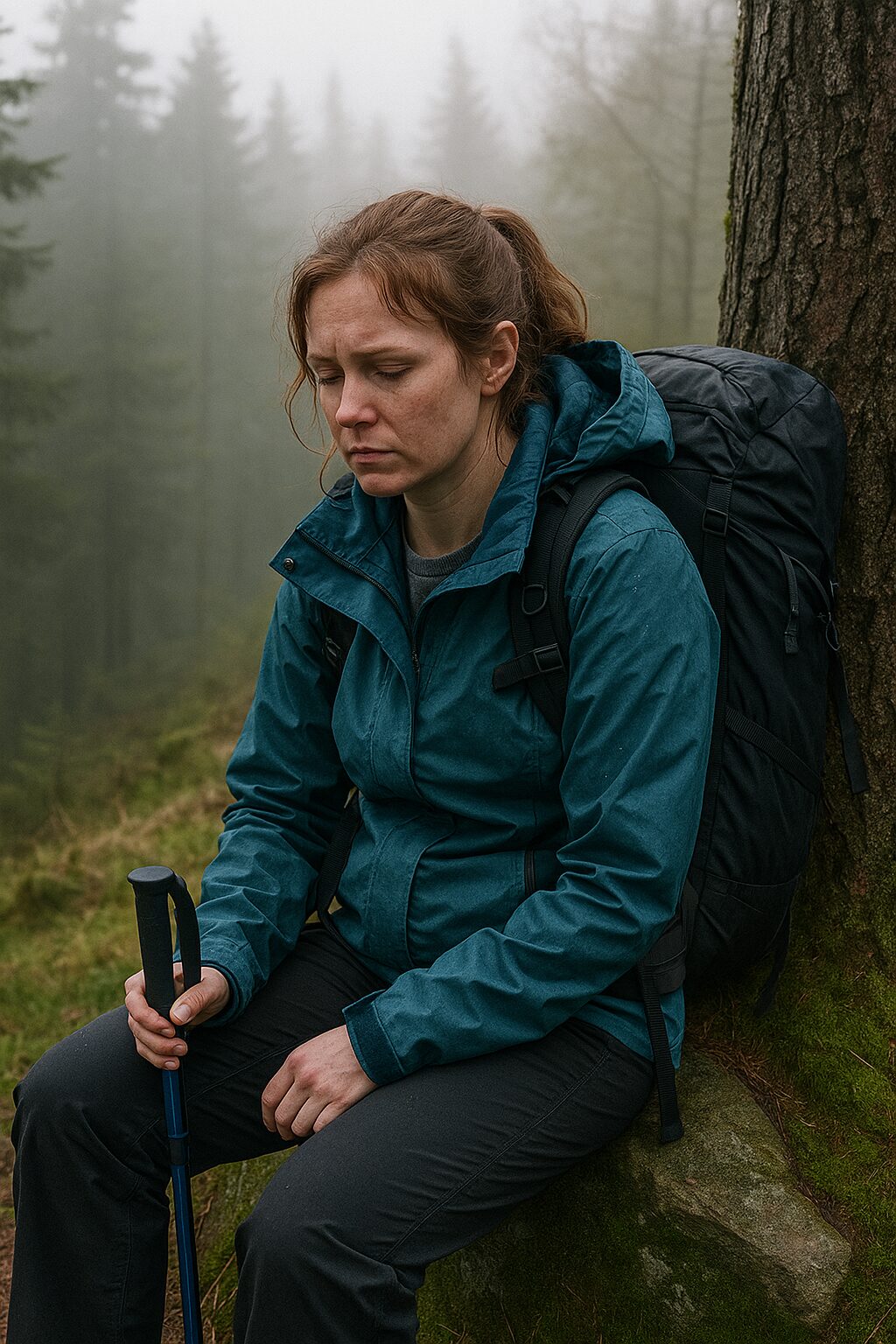
Reflecting — Not every day is easy!
Practical Tips: Hiking for Better Mental Health
While every hike is different, there are some practical ways to maximise the wellbeing benefits of your time outdoors. Whether you’re planning a gentle weekend ramble or a week-long trek, these tips can help make hiking a reliable tool for mental health.
1. Start Small, Build Gradually
You don’t need to tackle Ben Nevis or the Cape Wrath Trail to feel the benefits. A short walk in your local country park or along a canal towpath can still lift your mood. Build gradually — both in distance and difficulty — to keep hiking sustainable rather than overwhelming.
2. Prioritise Safety and Comfort
Poor planning or inadequate gear can turn a walk into a stressful experience. Essential basics include:
-
A well-fitting backpack (see our guide: How to Choose the Best Backpack for Multi-Day Hikes in Scotland).
-
Waterproof jacket and boots suited to UK weather.
-
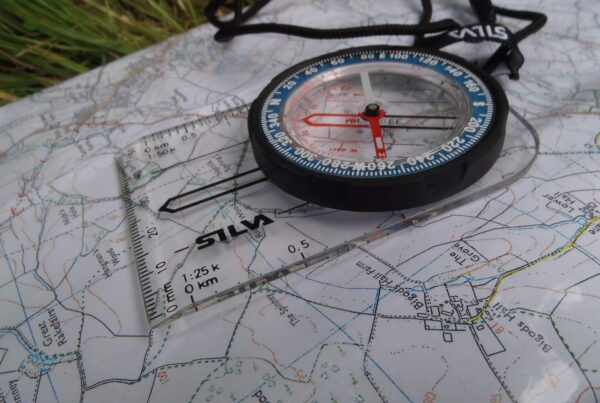
Maps (OS or digital) and navigation skills.
-
Enough food and water.
Feeling safe and prepared frees your mind to focus on the experience itself.
3. Embrace Mindfulness on the Trail
Hiking is a perfect opportunity to practise mindfulness. Notice the crunch of gravel underfoot, the smell of wet heather, the changing light on the hills. When your mind starts racing, bring it back to these small details. Many hikers find this meditative approach calming and grounding.
4. Hike with Others (or Not)
Some people find healing in solitude; others thrive in company. Be honest with yourself about what you need. Walking groups can provide structure and social support, while solo hikes can offer space for reflection. Both have their value. If you’re doing it alone try to talk to people on the trail, these conversations can often help motivation when things get low.
5. Leave the Pressure Behind
You don’t need to “bag peaks” or set speed records. Hiking for mental health isn’t about performance — it’s about presence. Allow yourself to wander, sit, or change plans without guilt. The hills will always be there tomorrow.
6. Use Hiking to Support Recovery, Not Replace It
For anyone living with serious mental health conditions, hiking can be an excellent complement to therapy and medication, but not a replacement. Recognise its role as one part of your wider wellbeing toolkit.
7. Keep It Regular
Like any healthy habit, consistency matters. A single day in the hills feels good, but a regular rhythm — weekly walks, seasonal treks — creates a deeper, longer-lasting effect.
Gear Tip for Lightening the Load
A lighter pack often means a lighter mood. Small changes like swapping to a lighter stove system or trimming down your first aid kit can make walking easier and less tiring. (see our guide: Best High-End Backpacks for UK Backpacking (2025 Edition) for weight-saving inspiration.)
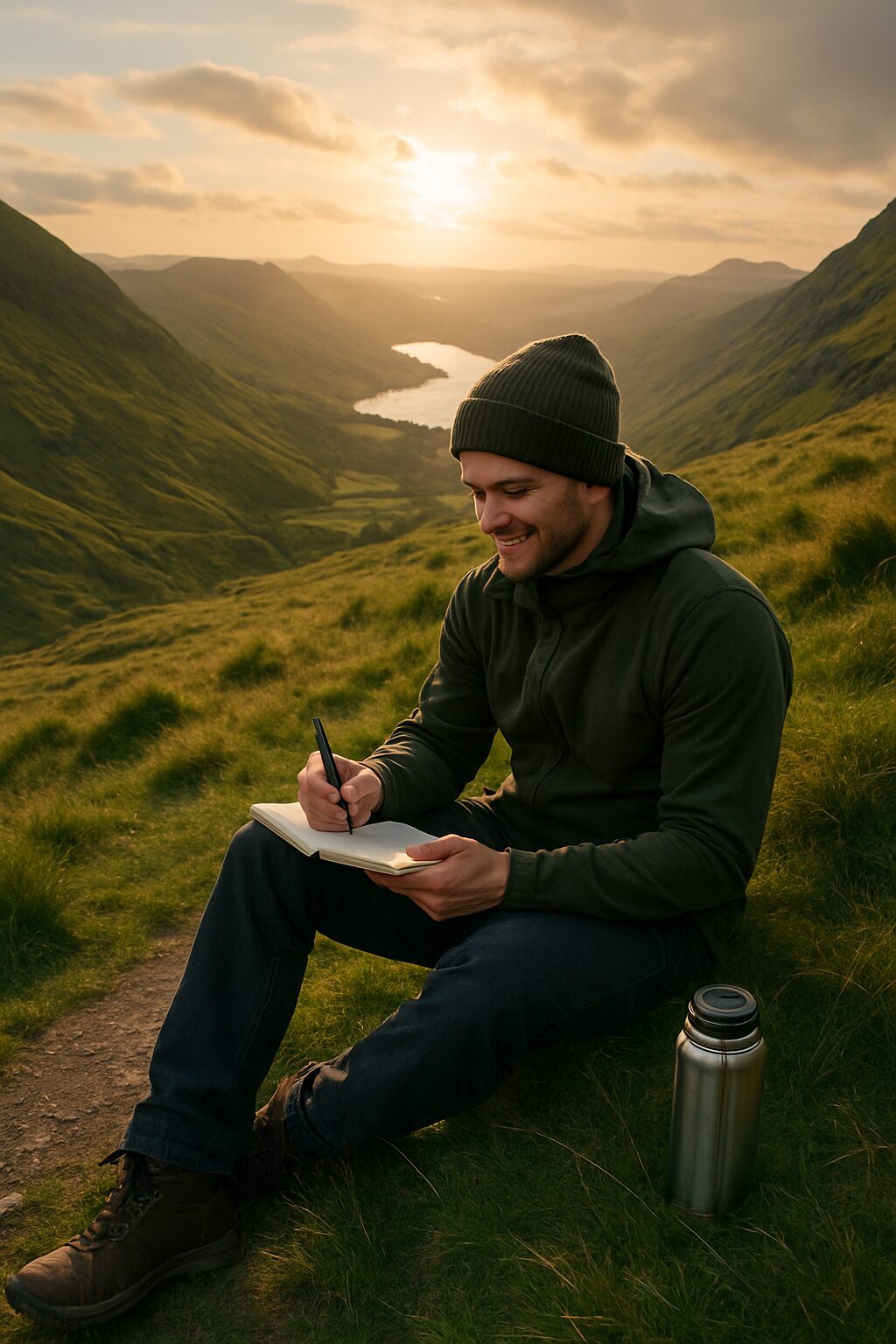
Journaling on the fell: capture the calm
Getting Started: Accessible UK Hikes for Beginners
You don’t need to tackle a legendary long-distance trail to experience the healing power of the outdoors. Some of Britain’s most restorative walks are short, accessible, and beginner-friendly — ideal for building confidence and discovering how hiking can boost your mental wellbeing (see our guide: Planning Your First UK Multi-Day Hike: A Beginner’s Roadmap).
The South Downs Way (Sections)
The full South Downs Way is 100 miles, but you don’t need to walk it all. Try the section from Lewes to Alfriston — chalk downs, rolling fields, and wide horizons within easy reach of London. It’s a landscape that feels both calming and uplifting.
Mam Tor & The Great Ridge, Peak District
A classic half-day hike that’s perfect for newcomers. From the car park at Mam Nick, it’s a steady climb to Mam Tor(“Mother Hill”), where panoramic views of Edale and the Hope Valley unfold. The ridge walk is exhilarating but not intimidating, giving beginners a taste of big-hill drama without the danger.
Snowdon (via the Llanberis Path)
For those seeking a bigger challenge, the Llanberis Path offers a relatively gentle (though still strenuous) ascent of Wales’ highest peak. It’s busy, but the atmosphere is often supportive and communal. For many, reaching the summit is an unforgettable confidence boost.
Arthur’s Seat, Edinburgh
Proof that you don’t need to leave the city to find hilltop therapy. A short, steep walk leads to views over Edinburgh and the Firth of Forth. Perfect for combining urban life with a taste of wilderness.
Loch Lomond Shores to Balmaha (West Highland Way Section)
This lakeside stretch of the West Highland Way is a superb introduction to long-distance hiking. The scenery shifts between quiet bays and woodland, with frequent spots to pause, breathe, and reflect.
Tips for Beginners
-
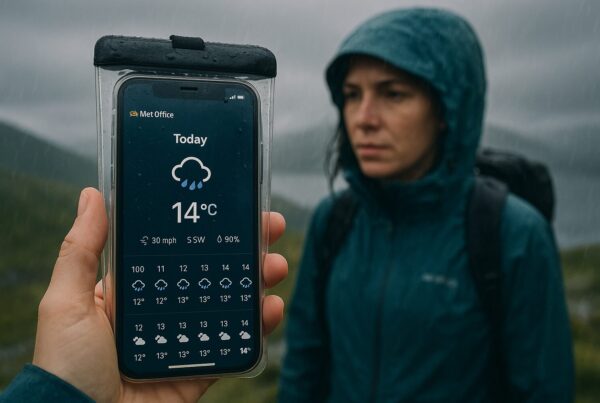
Check the forecast and dress accordingly — UK weather can change fast.
-
Take OS maps or a reliable GPS app like OS Maps or Komoot.
-
Don’t worry about distance — focus on enjoyment and presence.
-
Bring snacks and water: comfort on the trail matters for mood.
-
Celebrate the small wins: your first trig point, your first 10km, your first overnight.
Each of these walks shows that the UK’s mental health “outdoors therapy” is within reach, no matter your experience level.

South Downs Way: friendly, rolling miles accessible for all
Conclusion: Why the Hills Heal
From the misty ridges of the Lake District to the vast moorlands of Dartmoor, the UK’s hills offer something far greater than exercise. They are a natural sanctuary — places where stress softens, perspective widens, and resilience grows. Science explains much of this: the reduction in cortisol, the restoration of attention, the boost in serotonin. But anyone who has stood on a windswept summit, or wandered a heather-clad trail in silence, knows there’s something deeper too.
Hiking doesn’t erase life’s problems, but it changes how we face them. Each step taken in the hills is a small act of healing, a reminder that we are capable of moving forward, even when the path feels steep.
Making the Hills Part of Your Life
If you’re new to hiking, start small. Explore your local National Park. Take a train to a trailhead for a day walk. Join a group if company helps, or go solo if solitude heals. Over time, you may find the hills becoming not just a pastime, but a lifeline.
And remember: the UK’s landscapes are yours to explore. They belong to everyone, and they’re waiting — for your footsteps, your stories, your healing.
What’s Next
If this article resonates with you, why not share it with someone who might also benefit from the reminder that the outdoors can heal?
-
Explore our practical guides: Best High-End Backpacks for UK Backpacking (2025 Edition) and Planning Your First UK Multi-Day Hike: A Beginner’s Roadmap.
-
Plan your next adventure with our West Highland Way Trail Guide.
-
Or simply commit to one short hike this month, and notice how it feels.
The hills don’t just change the view. They change us.

Scottish Highlands sunset: perspective restored.
Further Reading and Mental Health Information: Mind and NHS Green Social Prescribing
Organisations and Groups: Black Girls Hike UK, Mental Health Mates and Ramblers Wellbeing Walks